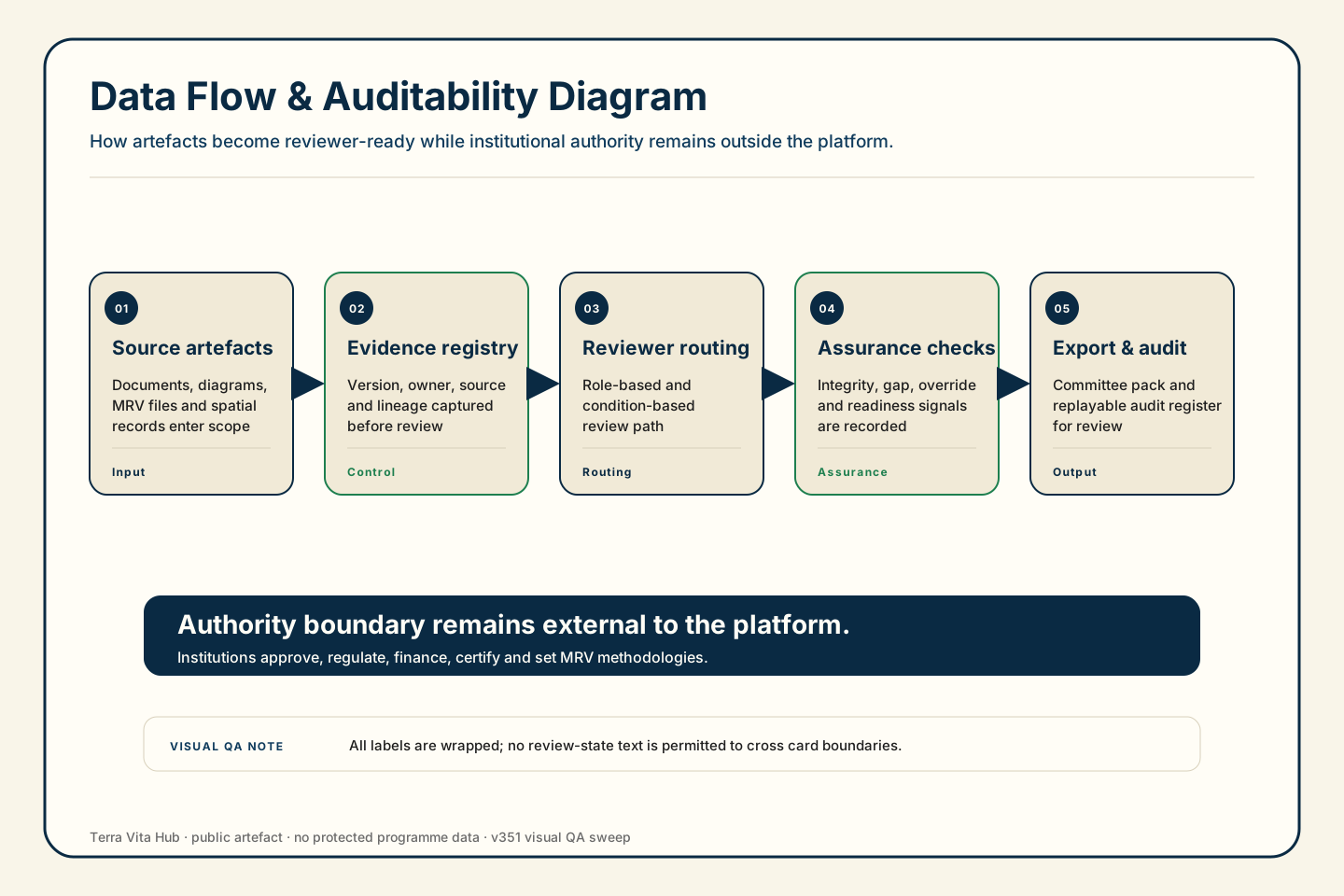
Hub placement
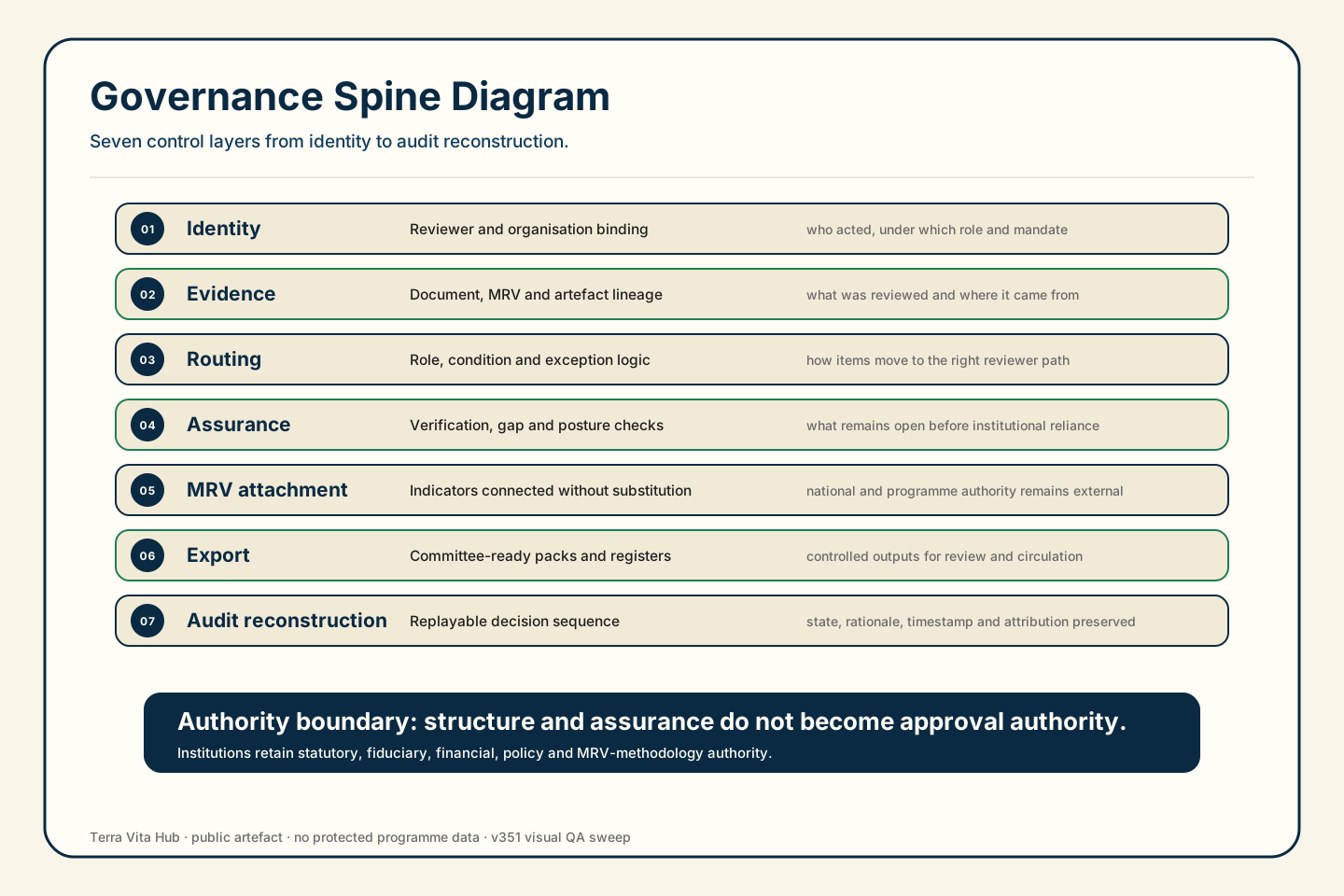
Governance Spine → Institutional Review Surfaces → Stewardship Benchmarking.
The architecture is organised around the seven-layer Governance Spine: identity, evidence, routing, assurance, MRV attachment, export and audit reconstruction.
This page links only to public artefacts bundled in the v442 search index. Reliance-grade evidence, live programme records and reviewer notes remain in protected workspaces.
Institutional Surface — Governance Spine Layer. Stewardship Benchmarking is a governed Hub module that reconstructs investor behaviour using attributable evidence from FieldTrace, land registries and ownership records. It enables institutions to review land-use, capital and ecological behaviour through a canonical reviewer route, without issuing ratings, certifications or investment advice. All outputs are reviewer-grade, evidence-bound and aligned with the governance spine. This module provides the transparency required for land-use oversight, generational transition, and capital-behaviour accountability.
Governance Spine → Institutional Review Surfaces → Stewardship Benchmarking.
Evidence Intake → Attribution → Behaviour Reconstruction → Reviewer Assessment → Benchmark Output.
No regulatory substitution, ratings, certification, ESG scoring or investment advice.
Top-level Hub pillar — directly under the Governance Spine. Capital‑Flow Readiness converts Terra Vita evidence, MRV pathways, operator readiness, responsibility matrices and decision-environment logic into institution-grade capital-flow decision outputs. It generates Decision‑Ready Dossiers, DGE-derived readiness scores, Failure Mode Diagnostics, Operator Upgrade Plans, Portfolio Evidence Summaries and Sovereign Reporting Outputs. It is not part of the Funding Spine; Funding Spine can only display released outputs generated here.
Governance Spine → Capital‑Flow Readiness → Decision Environments.
Decision Gate Engine → Readiness Score → Failure Diagnostic → Upgrade Pathway → Dossier / Export.
No evaluative logic in Funding Spine; no funding decision, investment advice, rating or certification.
Reviewers can move from orientation into the Governance Spine, then into the Assurance Layer and FieldTrace evidence route before requesting protected diligence.
Shared institutional orientation
Legal, risk, MRV, procurement and audit routing
Governance Spine, authority boundaries and evidence flow
Verification, integrity lock, admissibility and reliance
Field evidence and attribution route into assurance
Minimum proof before protected reliance review
Purpose-bound evidence access and reviewer action
FieldTrace envelopes enter Terra Vita Hub through a signed, hash-bound receiver. The receiver verifies the manifest and HMAC signature, records the ingest event, opens a protected review-intake row, and returns a deterministic Hub acknowledgement ID.
Reviewer-facing architecture only: receiver posture, authority boundary, event-envelope route and search metadata.
Operator records, evidence files, review-intake rows and intake decisions remain in protected Hub workspaces.
FieldTrace receiver intake is non-binding until an institution, committee or authorised reviewer acts under its own authority.
The Assurance Layer binds Governance, Evidence and Attribution into an institutionally admissible object. Controlled sharing and the Institutional Ledger preserve the reliance boundary after export.
Completeness, coherence, authority and attribution checks before reliance.
Freeze, hash and snapshot the programme state at institutional closure.
Generate the institutional reliance statement without replacing judgement.